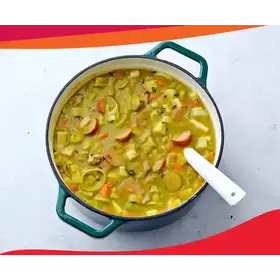
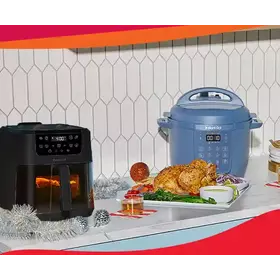
Slow cooking with your Instant Pot: this is how it works!
Slow cooking with an Instant Pot Multicooker ? Our multicookers offer endless possibilities for preparing your favorite dishes. To get the most out of this versatile kitchen companion, we'll share essential tips in this blog post to help you understand and use the slow-cook function effectively. Prepare delicious stews, soups, curries, pastas, or roasts, all with the Instant Pot!
Update 2025: Sous-vide is perfect for slow cooking
Unfortunately, it is now known that the slow cooking program of the Instant Pot does not work very well and is actually very unclear.
Because how hot does it actually get and why does it all take so long?
Sous-vide = perfect Slow Cooking & Yogurt
We strongly recommend the sous vide program for slow cooking and making yogurt with your Instant Pot.
The sous-vide program heats up quickly and becomes as hot as you set it to, accurate to 1°C.
These Instant Pots have a sous vide function: click here .
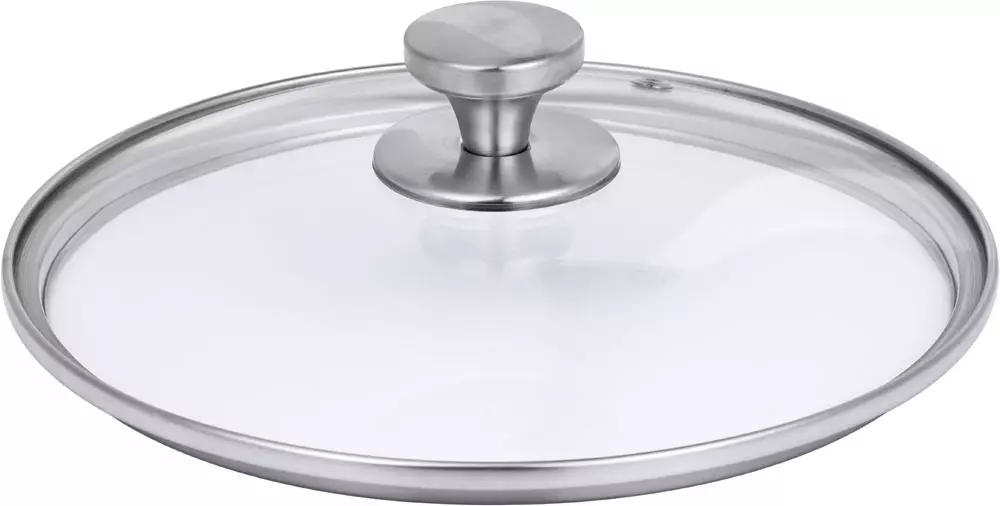
Additionally, we strongly recommend a glass lid for slow cooking .
What is a slow cooker?
A slow cooker is a specialized appliance that typically has a single purpose: slow cooking, and it excels at it. A slow cooker consists of three parts: the main heating element, an inner pot that holds the food and sits inside the pot, and a vented lid that sits on the pot but is never locked in place* to remain undisturbed during cooking. A slow cooker cooks slowly and for a long time over low heat.
The heat is so low and uses so little energy—much less than an oven—that you can set it and leave it on for many hours, even while you're working. It's that safe.
A slow cooker doesn't require any supervision. In fact, it works best when left completely undisturbed (unless a specific recipe calls for it otherwise). When it's time to eat, simply lift the lid and find a perfectly cooked meal.
And if that's not enough to love, slow cookers are super easy to use and inexpensive, but unfortunately not as versatile as a multicooker. "Slow cooker" is a general term. There are many brands of slow cookers. One example is the Crock-Pot, a brand name so well-known that it's often used interchangeably with "slow cooker."
Some slow cookers have locks or clamps to hold the lid in place, but this is only for transport and to prevent spillage. These clips/locks should never be used during the slow cooker process.
What is an Instant Pot?
Instant Pot is a brand name for a multicooker, just as Scotch Tape is a brand name for cellophane tape, Kleenex is a well-known brand name for tissues, and Crock-Pot is a brand name for slow cookers.
A multicooker is a kitchen appliance that does many things. But its main purpose is pressure cooking. Pressure cooking allows you to cook things much faster, allowing you to prepare dishes like stews in under an hour. That's what makes the Instant Pot so popular for rushed weeknight meals.
Today, the Instant Pot is available in a variety of sizes and models. It's by far the most popular multicooker, with over 30,000 5-star reviews on Amazon. The Instant Pot is a near-perfect appliance. Almost.
The Instant Pot is best known as a pressure cooker, but it can do so much more, such as sautéing and slow cooking—hence the word "multi." The Instant Pot is available in several models and versions, with the latest boasting that it's 10 appliances in one with settings for pressure cooker, slow cooker, rice cooker, yogurt maker, cake maker, egg cooker, sauté, sterilize, and see how many more!
Want to learn more about what an Instant Pot is? Click here !
Want to know why you should get an Instant Pot? Click here !
Slow cooking with an Instant Pot
The Instant Pot is great, but it has one shortcoming: its slow-cook mode isn't quite comparable to a dedicated slow cooker. It has many more different cooking programs, making it extremely versatile. Your Instant Pot can replace up to 10 different appliances, but slow cooking unfortunately falls short. True slow-cooking fanatics probably won't find an Instant Pot sufficient and will always want to keep a separate slow cooker. But that doesn't mean you can't slow-cook with an Instant Pot, as there are certainly solutions to circumvent these shortcomings. Just don't expect a set-it-and-forget-it approach like with a traditional slow cooker. You'll need to know how to convert a slow-cooker recipe, adjust the time and temperature, create good evaporation, and perhaps lower your expectations a bit. Below, we'll explain how you can still use your Instant Pot for slow cooking.
Adapting slow cooking recipes for your Instant Pot
Recipes specifically designed for a slow cooker usually contain liquids like water, broth, or stock. There's a reason for this, for example, the food being cooked requires liquid or the recipe calls for gravy or sauce. The measurements are specific and meant to be followed.
A slow cooker is designed to allow some of that moisture to evaporate and condense. It's all part of the process. The Instant Pot slow cooker doesn't account for this. It can't handle the necessary evaporation effectively.
Solution: Reduce the liquid in a slow cooker recipe by 15-20% when using the Instant Pot in slow-cook mode. This will compensate for the lack of evaporation (unless you purchase an additional attachment, which we'll discuss later).
Time
This is the tricky part. The key to a slow cooker's success is the requirement not to peek. Don't lift the lid! The rule of thumb is that for every time you lift the lid during the long slow-cooking process, you should add 25 minutes to the cooking time.
In the Instant Pot's slow-cook mode, things are a bit fickle, and you'll need to check periodically by opening the lid to see and test what's going on. You might need to add another hour of cooking time! Or you might discover so much liquid that you need to drain some of it.
Solution: Wait until you think the food is cooked through, then remove the lid. Check the internal temperature of the food with a thermometer. If you see too much liquid, you can drain it off as needed. If needed, continue slow cooking the Instant Pot for a few more minutes or even an hour. Unfortunately, it's not an exact science, and you'll have to guess and experiment.
Temperature
To make things even more confusing, the Instant Pot has three heat settings for the slow cooker (not including warm):
- Less (82°C to 88°C)
- Normal (88-93°C)
- More (93-99°C)
Slow cookers typically have three settings: Low (around 165°F), High (220°F), and Warm (200°F). While the Instant Pot's lowest setting appears to be similar to a slow cooker's lowest setting, it appears to operate at a much lower temperature, meaning cooking is slower.
Solution: To simulate a slow cooker's "low" setting, use the Instant Pot's "Normal" slow cooker setting. For a slow cooker's "High" setting, use the Instant Pot's "More" setting.
Evaporation
The Instant Pot is primarily a pressure cooker with a lid that seals and locks in place—which it needs to be, considering all that pressure! Of course, the pressure valve stays open when you use the Instant Pot as a slow cooker; otherwise, you'd be cooking under pressure. This does allow for some evaporation, but much less than with a traditional slow cooker. In my experience, that's not enough. With slow cookers, moisture loss is possible and inevitable through a hole in the lid. This means your dish slow-cooked in the Instant Pot will likely come out swimming in liquid, while the moisture was intended to evaporate.
Buy for jThe Instant Pot has a tempered glass lid that has a hole for steam and evaporation to escape and isn't locked in place. This will solve the evaporation problem. Plus, you can now see exactly what's happening in your Instant Pot, so you don't have to constantly remove the lid to check on it.
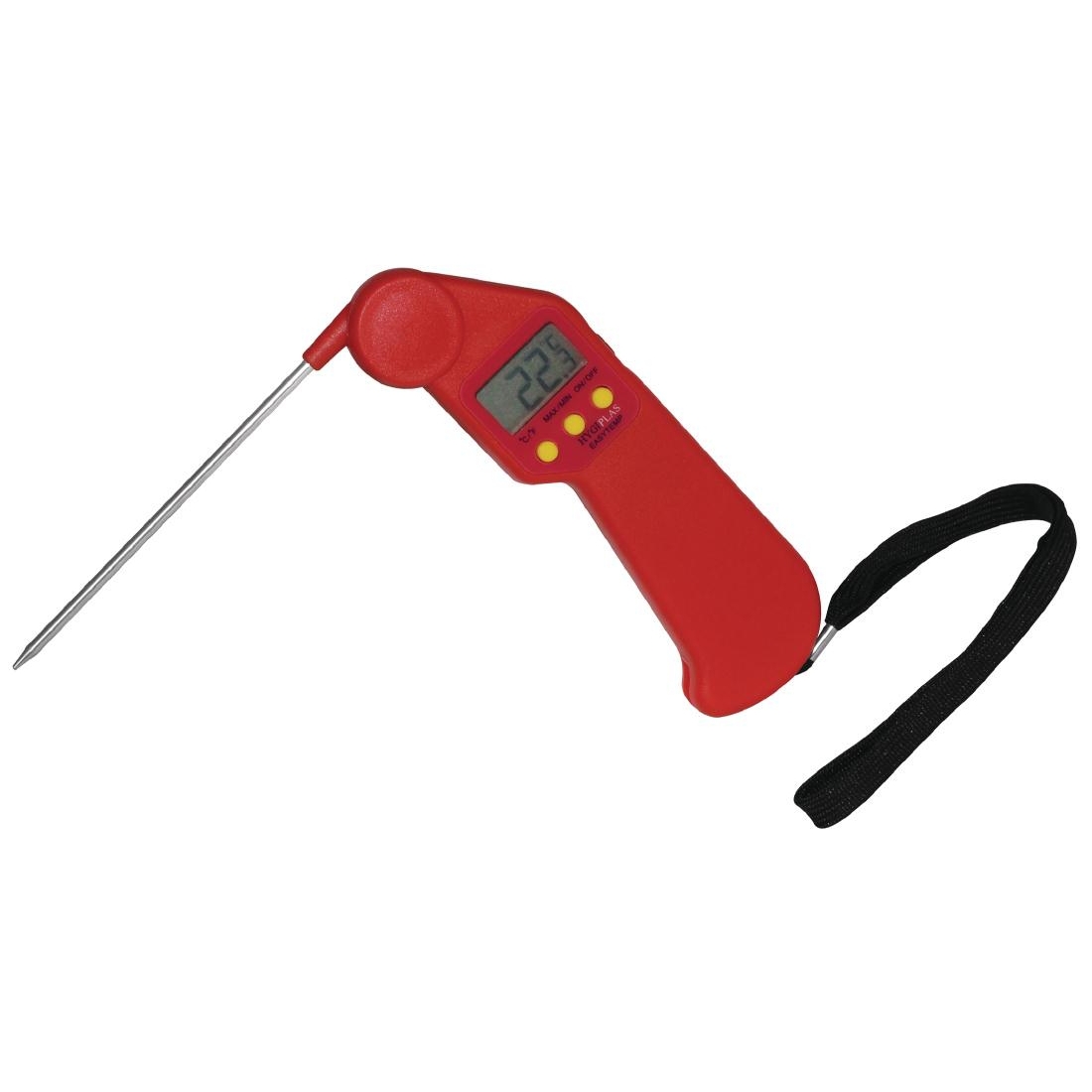
A good thermometer helps you monitor the temperature. Simply insert it through the hole in the lid (see above) so you know exactly what the temperature is.
Conclusion
The Instant Pot is a versatile multicooker that primarily uses pressure cooking. By reading this blog post, you'll also be able to make the most of its slow-cooking function. This way, you'll be ready to serve perfectly prepared slow-cooked meals. Trust the cooking process without peeking, let the Instant Pot preheat thoroughly, and enjoy the delicious results!
Would you like more of this kind of useful information? Sign up for our newsletter for the latest news, useful tips and advice, delicious recipes, and special offers. We email at most once a week.